Category Archives: Uncategorized

Weekend Reads

via PWxyz:

The Worst Book Ever is ‘Moon People’
Gabe Habash — January 31st, 2012

Moon People has reshaped my literary perceptions.”Goodreads reviewer Neil

What I’m going to do before telling you about the epic stinker Moon People by Dale M. Courtney is issue a blanket sic statement for the duration of this article. I think that’s important to say before we move forward. Anyway, this is how chapter one of Moon People by Dale M. Courtney opens (source):

This story begins on a Beautiful sunny day in Daytona Beach Florida With a man by the name of David Braymer. A 45-year-old Single man that works at the local High school as a science teacher and astrology in the 12-grade level. Now he’s been here about 5 years and has become kind of partial to a young lady by the name of Cheral Baskel a local restaurant owner in Daytona Beach. At the moment Cheral’s preparing her restaurant for another Shuttle launch at the cape and everyone always gathers at her place because you can see the launch real good at her place. It’s also on the water and its real close to the cape and she really decks the place out.

You probably have questions. That’s understandable.

2 Comments

Filed under Uncategorized

All the real things, the authentic things, the honest things

I also wish I hadn’t bought “Freedom” as an ebook. Every time I open the Kindle app, I have to look at that blue bird pecking at a wall of Star Wars-era typography.

via The Christian Science Monitor:

Jonathan Franzen: E-readers are ‘damaging to society’
Jonathan Franzen, the author of ‘Freedom’ and ‘The Corrections,’ calls e-readers incompatible with ‘responsible self-government.’
By Husna Haq / January 30, 2012

Speaking at the Hay Festival in Colombia, Jonathan Franzen had harsh words for e-books, saying they are 'not for serious readers.'

Jonathan Franzen doesn’t want you to read his bestsellers on e-readers. The acclaimed novelist of “Freedom” and “The Corrections” launched a tirade against e-books at a recent literary event, calling them “not for serious readers” and “damaging to society.”

*

The inevitable response.

via Huffington Post:

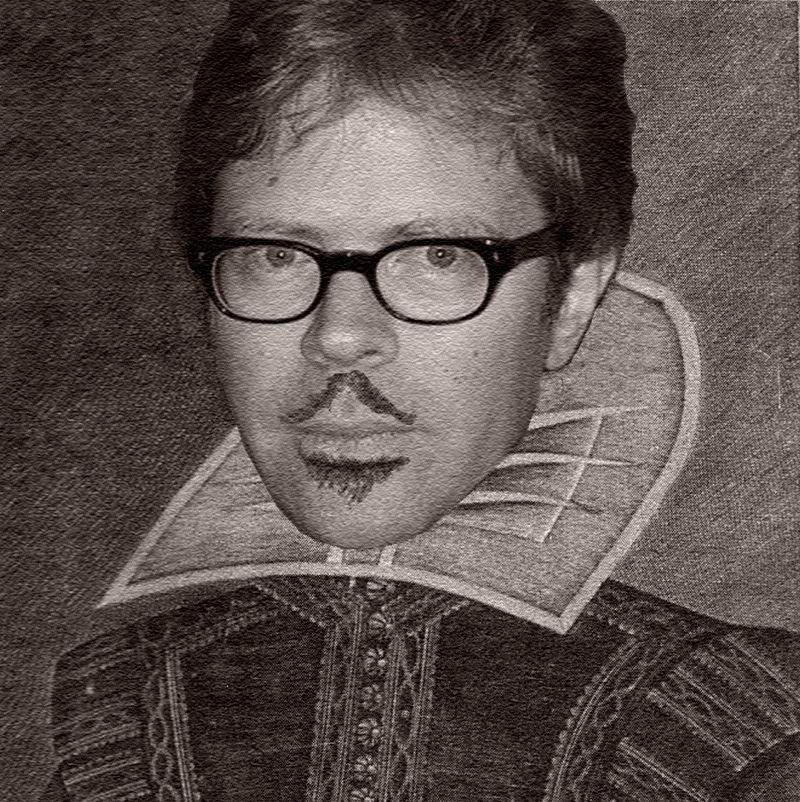
Johannes Franzen: “Print Books Are Damaging to Society”

“Maybe nobody will care about hand-copied books 50 years from now, but I do. When I read a book that’s been painstakingly transcribed by hand, I’m handling an object that took a scribe six months to a year to copy,” Johannes Franzen told booksellers at the 1564 Frankfurt Book Fair.

“I think, for serious readers, a sense of permanence has always been part of the reading experience. Life is temporary: You might lose your brother at sea to scurvy, your first wife in childbirth, your mistress to tuberculosis, your second wife in childbirth, and so on. But a hand-copied book is forever.

Leave a comment

Filed under Uncategorized

After All, It Is Your Name On The Cover

For an indie writer who does things properly, check out my friend and Clarion classmate, Annie Bellet. This is the cover of her latest book:

*

via INDIEREADER.com:

Why Indie Authors Don’t Get No Respect
by Melissa Foster and Amy Edelman

Big Reason #1: Bad Editing

The main complaint about the indie book category is the lack of editing.  It’s true that this situation has changed a bit in the past few years, due in part to better and more diligent indie authors and—on the flip side—slack in the editing of traditionally published books.

An anonymous letter sent by a group of successful traditionally published authors on M.J. Rose’s blog, Buzz Balls and Hype, requested the following: “PLEASE EDIT MY BOOK. Even if you know it will sell and get reviewed because of my name and my previous books, even though you recognize the many good qualities in the manuscript I have turned in, if you think it needs a serious revision, please, please, ask me to do it…Please do not let me go out in public this time with my slip showing and parsley on my tooth…And while we are on the subject, please employ a copy editor who understands the basic rules of grammar and has a working knowledge of the subject of the book sufficient to make useful and necessary changes in the manuscript instead of adding egregious errors while omitting to find crucial mistakes and typos. I love our nice expense account lunches, and I love you, but above all, I really, really want you to edit my book…”

It wouldn’t hurt for indie authors to demand the same.

Leave a comment

Filed under Uncategorized

Horror Across the Pond

via The Guardian:

Women writers turn to the horror story
Jeanette Winterson and Helen Dunmore among famous names venturing into the horror genre this year

Helen Dunmore: hoping to scare the wits out of her readers. Photograph: Christopher Jones / Rex Features

As an icy wind blows in from the east, the grip of a good horror story is tightening its hold on many of Britain’s leading literary talents. Terrifying new novels from outspoken author Jeanette Winterson and from the acclaimed novelist and children’s writer Helen Dunmore are at the head of a blast of chilling fiction heading for British bookshops.

Where once an accomplished “lady novelist” in search of a change might have attempted a neat whodunnit or perhaps a cosy “Aga saga”, suddenly the unholy desire to create a horror or ghost story has seized a range of established talents. Even the television book club presenter Judy Finnigan has been drawn to the genre for her debut novel, a ghost story that will be out this autumn.

Winterson, who had her first success with the novel Oranges Are Not the Only Fruit, will try her hand at scaring her readers witless this summer with a story based on the infamous Pendle witch trials held at Lancaster castle in 1612. Dunmore, the writer much loved for her children’s books, poetry and award-winning novels, has followed suit. Her first horror novel, a supernatural thriller called The Greatcoat, has been published by Hammer Books, the imprint of the now revived film studios that brought British cinema audiences a succession of gory titles from the 1950s to the 1970s. Dunmore’s debut marks the publisher’s decision to commission a series of original works rather than rely on the novelisations of horror films which it also publishes.

“The interesting fiction at the moment is playing with genres, slipping between them,” said Hammer publisher Selina Walker. “So we’re approaching all the literary or established greats to see whether they would like to write something with a paranormal twist.”

Leave a comment

Filed under Uncategorized

Stephen King’s Wang

One of my favorite articles from last year.

via The New York Times:

The Muses of Insert, Delete and Execute
By JENNIFER SCHUESSLER

Published: December 25, 2011

The literary history of the typewriter has its well-established milestones, from Mark Twain producing the first typewritten manuscript with “Life on the Mississippi” to Truman Capote famously dismissing Jack Kerouac’s “On the Road,” pounded out on a 120-foot scroll, with the quip “That’s not writing, that’s typing.”

Brendan Smialowski for The New York Times

Matthew G. Kirschenbaum, a professor of English, asks, “Who was the first novelist to use a word processor?”

The literary history of word processing is far murkier, but that isn’t stopping Matthew G. Kirschenbaum, an associate professor of English at the University of Maryland, from trying to recover it, one casual deletion and trashed document at a time.

Leave a comment

Filed under Uncategorized

Untitled

Coming up with a title for a story is not something I am good at. When starting a first draft, I type the main character’s name at the top of the page, centered and underlined, and hope that a better title will suggest itself as I go along (it never does).

Fun Facts about titles:

* Lord of the Flies was originally titled, Strangers From Within.

This was what William Golding’s first novel was called when it was rescued from the slush pile at Faber and Faber. Editor Charles Monteith prescribed some rewriting and an alteration of the title to Lord of the Flies.

* War and Peace was first published as, All’s Well that Ends Well.

Tolstoy’s incongruously cheerful projected title for War and Peace, which was actually first published under the title 1805.

* Don Delillo originally wanted his novel White Noise to be titled, Panasonic.

*

via Beyond the Margins:

Finding (and Losing) Book Titles
By Randy Susan Meyers

Picture having a baby. You named that baby so soon after conception. Dear little Lev. It’s the Russian version of your father’s name. It has great meaning. Birth! The nurse places him in your arms. She smiles. Than she says, “Change his name. He sounds too much like a Jewish cowboy.”

For the effort most authors put into titling their book, you’d think they’d get to see it splashed across the cover—but an overwhelming amount of us are told by our editors, “Love the book, hate the title. Find another one.

Marianne Leone says she “wanted JESSE: A MOTHER’S STORY to be THE RUNNING MADONNA, but Simon & Schuster thought it sounded like a workout book by the rock star.”

In my unscientific study, only 17% of the author-respondents were able to keep their chosen titles.  My original title for THE MURDERER’S DAUGHTERS was ADOPTING ADULTS, which I was told sounded like a self-help book. (Oh, they were right on the money there.) My editor chose the final title, tacking on ‘a novel’ when I insisted people would think it was a mystery.

Leave a comment

Filed under Uncategorized

Technology and Reading

Three recent articles on how technology is shifting the way we read (and write).

*

First, the rise of digital readers accelerates:

via Pew Internet

Tablet and E-book reader Ownership Nearly Double Over the Holiday Gift-Giving Period

The share of adults in the United States who own tablet computers nearly doubled from 10% to 19% between mid-December and early January and the same surge in growth also applied to e-book readers, which also jumped from 10% to 19% over the same time period.

*

Second, how one author is thriving in the e-book world:

via Joe Konrath

$100,000

One hundred grand. That’s how much I’ve made on Amazon in the last three weeks.


This is just for my self-pubbed Kindle titles. It doesn’t include Shaken and Stirred, which were published by Amazon’s imprints. It doesn’t include any of my legacy sales, print or ebook. It doesn’t include audiobook sales. It doesn’t include sales from other platforms.

This is from my self-pubbed books. The ones the Big 6 rejected.

*

Lastly, some of the pitfalls that writers must navigate:

via ZDNet

How Apple is sabotaging an open standard for digital books

Summary: For nearly two years, Apple has wooed digital book publishers and authors with its unconditional support of the open EPUB standard. With last week’s introduction of iBooks 2.0, Apple has deliberately locked out that standard. Here’s why you should care.

Leave a comment

Filed under Uncategorized

A 78-year-old writer sells his first spec screenplay

I hear his Twitter posts are awesome, too.

via Deadline.com:

Pulitzer Prize-winning Author Cormac McCarthy Sells His First Spec Script

EXCLUSIVE: While Cormac McCarthy’s novels have been turned into No Country For Old Men, The Road and All the Pretty Horses, he’s left the film adaptations to others. McCarthy has surprised everybody by writing his first spec screenplay. Nick Wechsler, Steve and Paula Mae Schwartz, the producing trio behind the adaptation of McCarthy’s Pulitzer Prize-winner The Road, have just closed a deal to take The Counselor off the table with a preemptive acquisition.

Leave a comment

Filed under Uncategorized

Margaret Atwood: “I did not anticipate any of this…”

Fascinating article by the author of The Handmaid’s Tale.

via The Guardian:

Haunted by The Handmaid’s Tale

It has been banned in schools, made into a film and an opera, and the title has become a shorthand for repressive regimes against women

The Handmaid's Tale, English National Opera

‘The book appeared in Canada in the fall of 1985 to baffled and sometimes anxious reviews’ … the English National Opera production of The Handmaid’s Tale, 2003. Photograph: Tristram KentonSome books haunt the reader. Others haunt the writer. The Handmaid's Tale has done both.

The Handmaid’s Tale has not been out of print since it was first published, back in 1985. It has sold millions of copies worldwide and has appeared in a bewildering number of translations and editions. It has become a sort of tag for those writing about shifts towards policies aimed at controlling women, and especially women’s bodies and reproductive functions: “Like something out of The Handmaid’s Tale” and “Here comes The Handmaid’s Tale” have become familiar phrases. It has been expelled from high schools, and has inspired odd website blogs discussing its descriptions of the repression of women as if they were recipes. People – not only women – have sent me photographs of their bodies with phrases from The Handmaid’s Tale tattooed on them, “Nolite te bastardes carborundorum” and “Are there any questions?” being the most frequent. The book has had several dramatic incarnations, a film (with screenplay by Harold Pinter and direction by Volker Schlöndorff) and an opera (by Poul Ruders) among them. Revellers dress up as Handmaids on Hallowe’en and also for protest marches – these two uses of its costumes mirroring its doubleness. Is it entertainment or dire political prophecy? Can it be both? I did not anticipate any of this when I was writing the book.

I began this book almost 30 years ago, in the spring of 1984, while living in West Berlin – still encircled, at that time, by the Berlin Wall. The book was not called The Handmaid’s Tale at first – it was called Offred – but I note in my journal that its name changed on 3 January 1985, when almost 150 pages had been written.

Leave a comment

Filed under Uncategorized

Perpetual Folly

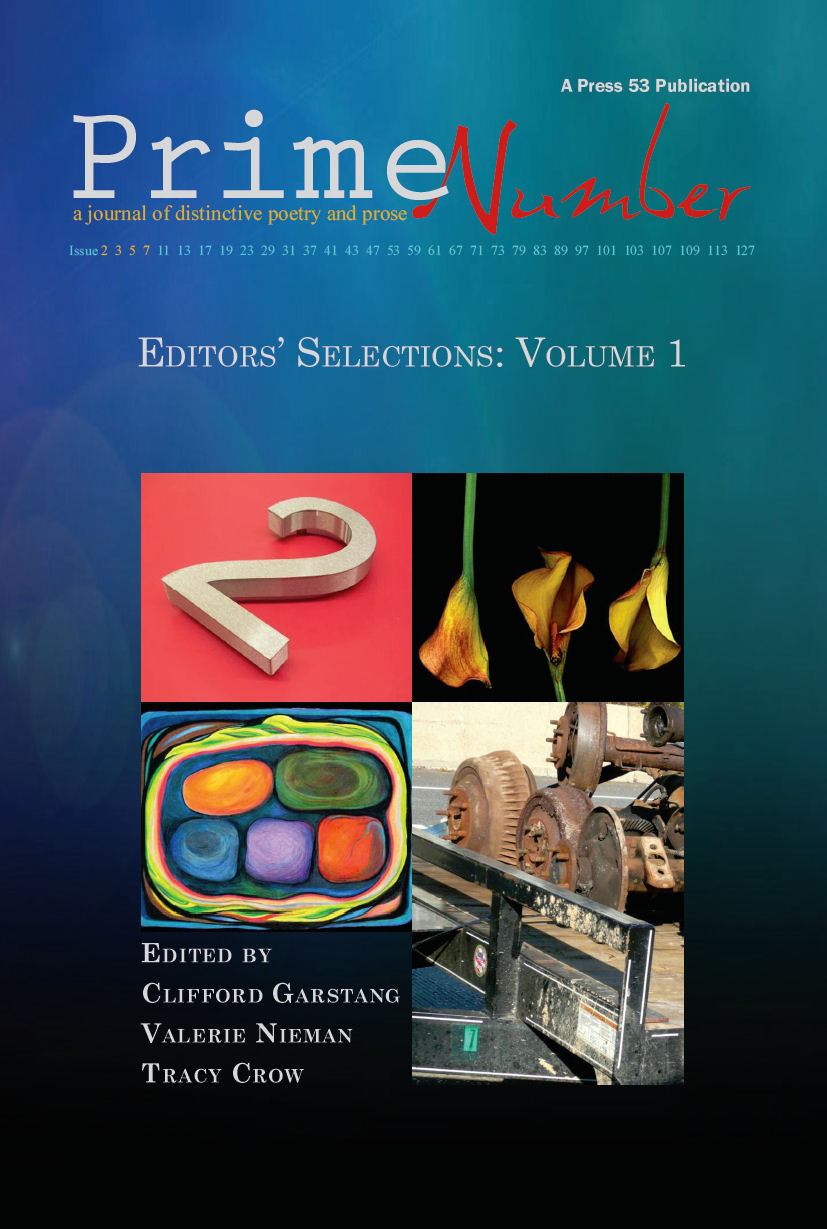
Really pleased that my short story, “Euler’s Identitity”, is part of this anthology.

Prime Number Magazine: Editors’ Selections Vol. 1

I am very excited to announce that Volume 1 of the Prime Number Magazine Editors’ Selections is available for order.

Prime Number Magazine debuted in July 2010 with Issue 2 (we use prime numbers for our online issues, and the next issue our 8th, is No. 17 and will go live in 2 weeks). We published a lot of terrific work over the course of the first year, and this print annual volume includes only a small portion of it.

Leave a comment

Filed under Uncategorized