Unintended Subtext: You Sad Mediocrities…

I enjoyed reading Janette Turner Hospital‘s novel, “Oyster“. However, the letter she sent to her former MFA students at the University of South Carolina may be her most (unintentionally) insightful work to date.

via GAWKER:

Columbia Writing Professor Sends World’s Haughtiest Email to Former Students

Janette Turner Hospital is the author of Orpheus Lost and other books, and a professor at Columbia. She sent MFA students at her old school, the University of South Carolina, the following note about their inferiority. It is amazing.

Excerpt:
“As for news from this very different MFA planet, I’m in seventh heaven teaching here, and not only because I have Orhan Pamuk (whom I hope to bring to USC for Caught in the Creative Act), Oliver Sacks, Simon Schama, Richard Howard, Margo Jefferson, etc., etc., as colleagues, though that is obviously part of it.

My students also live and move and write in seventh heaven and in a fever of creative excitement. Columbia’s MFA is rigorous and competitive but students don’t just have publication as a goal – they take that for granted, since about half the graduating class has a book published or a publishing contract in hand by graduation – so they have their sights set on Pulitzers.”

2 Comments

Filed under Uncategorized

The Impact of Technology on Reading, Part 4 (Followup)

I wrote about the relationship between author and publisher in my last post. The following article amplifies the point that digital books need not condemn literary writers to penury and may, in fact,  actually enable authors to benefit more fully from the works they produce.

via Publishers Weekly:

Rosetta Books Announces New Higher E-Book Royalty Rate
By Craig Morgan Teicher

E-book publisher Rosetta Books announced what it calls the “highest industry standard e-book royalty rate” yesterday. The new royalty terms give Rosetta authors 50% of net receipts on the first 2,500 copies of the e-books sold, followed by 60% of receipts for subsequent copies.

Leave a comment

Filed under Uncategorized

The Impact of Technology on Reading, Part 4

Important article exploring the economic realities that literary writers face with the rise of digital text. E.L. Doctorow has an interesting comment near the end of the piece.

My experience has been that reading on my iPad has actually led me to buy books when they are released rather than wait for the paperback or a used copy. I’ve also bought books I may have passed over were it not for the convenience and lower price of ebooks. It seems to me that the problems described below have more to do with the publisher-author relationship than the digital format.

via Rupert Murdoch’s Wall Street Journal:

Authors Feel Pinch in Age of E-Books

The new economics of the e-book make the author’s quandary painfully clear: A new $28 hardcover book returns half, or $14, to the publisher, and 15%, or $4.20, to the author. Under many e-book deals currently, a digital book sells for $12.99, returning 70%, or $9.09, to the publisher and typically 25% of that, or $2.27, to the author.

The upshot: From an e-book sale, an author makes a little more than half what he or she makes from a hardcover sale.

1 Comment

Filed under Uncategorized

Why I’m Not Renewing My Subscription, Update #2

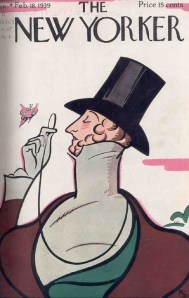
Correcting a previous post where I wrote that I would not be renewing my subscription to The New Yorker until it was made available in a digital format– I’ve since found that a digital subscription is available via Kindle and Nook (though there seem to be some technical issues for iPad users) for the same price as a regular subscription

The New Yorker has also just released an iPad app that looks really promising although it seems that each issue, for now, will cost $5. A short promotional video for the app can be found here.

I also received an email from One Story which said, “We are currently working on making One Story available for the iPad.” This is good news, though One Story already sends out a large print version in PDF to subscribers who request it– seems like they could just send a regular version in PDF to those subscriber who request it in lieu of the paper version.

1 Comment

Filed under Uncategorized

Pointer #13 – Arch Literary Journal

* Online lit mags are publishing some of the most intriguing writing available today. Every Monday, I post a pointer to a site that offers fiction and/or poetry either as free content or as samples from subscriber issues. Today’s pointer is to Arch Literary Journal.

About Arch Literary Journal:

We seek to publish new writing that transforms the way we envision, startles us into new ways of knowing, subverts expectations, and delivers new experiences of language. We embrace multiplicity: we look to mirror and extend the diverse nature of today’s most exciting literature both in the U.S. and around the world.

Fiction excerpt:

The Man With Two Arms
by Billy Lombardo

SEVERAL MILES WEST OF THE EXACT MIDPOINT BETWEEN COMISKEY Park and Wrigley Field in a town named  Forest Park, on a street named Lathrop, in the first floor apartment  of a two-story made of lumber and red brick, at eleven o’clock, on the night of May 15, 1984, just fourteen hours before the world’s  greatest baseball player was born to the world, Henry Granville applied cocoa butter to the mountainous belly of Lori Granville, his very pregnant wife.

A woman named Judy Copeland lived in the flat above the Granvilles. She was 103 years old, and apart from the fact that she controlled the heat, by way of the Honeywell thermostat on her dining room wall, in both apartments of the stiflingly warm two-flat, Henry had no complaints about the tenant upstairs. She made no noise, and as she was nearly deaf, neither did she complain of it. To offset the heat, Henry, who’d grown accustomed to sleeping on the right side of his wife during their courtship, switched to the left side, next to the window, when they bought the house on Lathrop and inherited Judy Copeland. Even on the coldest of winter nights, when February bit like teeth into the ears of the city, Henry slept with the window open.

Leave a comment

Filed under Uncategorized

Why I’m Not Renewing My Subscription, Update #1

Following up on an earlier post, here are some of my subscriptions that are set to expire and the digital options, if any, that are available.

*

Offers a digital subscription, uses PDF format, includes online access to their archives. Print subscription = $25, Digital subscription = $40. Will not renew.

*

Offers a digital subscription via Amazon.com, 18 issues per year, Print = $21, Digital = $27. This one really hurts, but I will not renew– I realize there are fees with Amazon.com but digital editions should be equivalent in price (or cheaper than) their paper counterparts.

*

Offers online subscription (currently in Beta) in Realview format, requires Javascript. Pricing unknown. Will not renew– digital issue must be downloadable to be ownable.

*

No digital subscription offered. Will not renew.

2 Comments

Filed under Uncategorized

The Horror, The Horror

TMI – My last few days have proven one thing about the writing life– what it lacks in glamor, it more than makes up for in squalor.

Here’s a list of five novels recommended by Bob Fingerman, a horror writer. Like the Barker and Matheson, but Xombies? Seriously? Dude, that book sucked.

via Entertainment Weekly:

‘Pariah’ author Bob Fingerman reveals his five favorite tomes of terror

Bob Fingerman says that during his spell dwelling on Manhattan’s Upper East Side in the mid-’90s he came to the conclusion the area was not exactly the liveliest place on earth. “It felt zombie-like in a lot of ways,” says the writer and artist. “You’d see lots of old women eating alone in diners. There seemed to be a quality of just waiting for death.” Way to big the burg up, dude! “This is why I don’t work for the Upper East Side Board of Tourism,” laughs the now Upper West Side-dwelling Fingerman.  “‘Come and see the living dead!’”

Leave a comment

Filed under Uncategorized

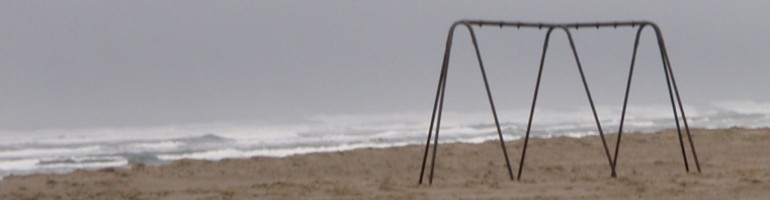
Bellows Beach

Read this article at The Oregonian:

Author Susan Casey rides a wave from great white sharks to extreme surfing


Casey is an experienced magazine editor who worked at Outside and Sports Illustrated for Women before Winfrey hired her earlier this year to revive O, which needed some fresh blood. Casey’s also a jump-in-the-story journalist whose new book “The Wave: In Pursuit of the Rogues, Freaks, and Giants of the Ocean” is a natural follow-up to her first book, “The Devil’s Teeth: A True Story of Obsession and Survival Among America’s Great White Sharks.”

Brought back some memories of surfing at Bellows when I was a kid:

– Skipping school after a tropical storm had passed, the waves glassy and utterly perfect, tubular barrels, no chop, no one else around.

– Two days when the backwash was so strong, it would collide with incoming waves and geyser water up at least 20 feet. Riding a backwash into a wave and getting tossed into the air.

– Body-surfing with a tray stolen from McDonald’s.

– Getting stung so many times by Portuguese Man-of-War one summer that I built up an immunity to the venom.

– Paddling for a wave, then paddling (fast) for shore after seeing a big shark silhouetted in the swell.

– Having my towel and T-shirt stolen from the beach while I’m in the water.

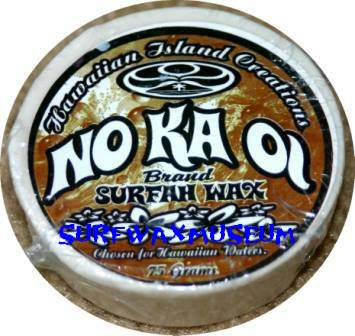
– My belly covered with scabs from wax-rash, the bliss of switching from Mr. Zog’s Sex Wax to No Ka Oi.

– Watching a sea turtle surface 20 yards away, then ten yards, then so close I could almost have reached out and stroked its shell.

Bellows Beach Park

Leave a comment

Filed under Uncategorized

Pointer #12 – Apex Magazine

* Online lit mags are publishing some of the most intriguing writing available today. Every Monday, I post a pointer to a site that offers fiction and/or poetry either as free content or as samples from subscriber issues. Today’s pointer is to Apex Magazine.

Apex Magazine is edited by Catherynne M. Valente, author of the terrific novel, Palimpsest.

via Duotrope:

We do not want hackneyed, cliched plots or neat, tidy stories that take no risks. We do not want Idea Stories with no character development or prose style, nor do we want derivative fantasy with Tolkien’s serial numbers filed off. What we want is sheer, unvarnished awesomeness. We want the stories it scared you to write. We want stories full of marrow and passion, stories that are twisted, strange, and beautiful. We want science fiction, fantasy, horror, and mash-ups of all three—the dark, weird stuff down at the bottom of your little literary heart.

fiction excerpt from “Portage” by An Owomoyela:

When it came time to carry her father’s soul down from the mountain, she had nothing to carry it in. The bowl her mother had carved from heirloom ivory, fitted together like a puzzle mosaic and watertight without needing glue, had been shattered that morning in an argument with her father’s retainer. No other bowl had been carved with the requisite love for him. But her father’s soul couldn’t be left up at the temple on Mount Ossus, so she went with the pilgrims to claim him before the sun did.

She stood in rank with them as the soul-preparers poured distillations from the cleaned skulls of the dead. When they came to her, a girl whose name was soon-after forgotten, she set her jaw and cupped her hands like a beggar. “Give me my father,” she said.

1 Comment

Filed under Uncategorized

Get a Real Degree

I’ve read Batuman’s review of The Programme Era: Postwar Fiction and the Rise of Creative Writing by Mark McGurl a couple of times now and I agree with his her point that MFA programs tend to to be ahistorical, not situating young writers within the long tradition of literature they aspire to join (in my limited experience). Seems to me though that this is more a criticism of Undergraduate programs which should, but too often don’t, provide their students with a broad overview of the culture they are a part of. As graduate programs, MFAs are based on the assumption that critical understandings of literature and history have already been acquired. Sadly, this is  often not the case as institutions focus more on meeting the needs of industry than the fostering of a thoughtful citizenry.

At London Review of Books:

Get a Real Degree
by Elif Batuman

Selected quotes:

I should state up front that I am not a fan of programme fiction. Basically, I feel about it as towards new fiction from a developing nation with no literary tradition: I recognise that it has anthropological interest, and is compelling to those whose experience it describes, but I probably wouldn’t read it for fun. Moreover, if I wanted to read literature from the developing world, I would go ahead and read literature from the developing world. At least that way I’d learn something about some less privileged culture – about a less privileged culture that some people were actually born into, as opposed to one that they opted into by enrolling in an MFA programme.

*

As long as it views writing as shameful, the programme will not generate good books, except by accident. Pretending that literary production is a non-elite activity is both pointless and disingenuous.

*

I think of myself as someone who prefers novels and stories to non-fiction; yet, for human interest, skilful storytelling, humour, and insightful reflection on the historical moment, I find the average episode of This American Life to be 99 per cent more reliable than the average new American work of literary fiction. The juxtaposition of personal narrative with the facts of the world and the facts of literature – the real work of the novel – is taking place today largely in memoirs and essays.

*

In the greater scheme, of course, the creative writing programme is not one of the evils of the world. It’s a successful, self-sufficient economy, making teachers, students and university administrators happy. As for literature, it will be neither made nor broken by the programme, which is doubtless as incapable of ruining a good writer as of transforming a bad one. That said, the fact that the programme isn’t a slaughterhouse doesn’t mean we should celebrate, or condone, its worst features. Why can’t the programme be better than it is? Why can’t it teach writers about history and the world, and not just about adverbs and themselves? Why can’t it at least try?

Leave a comment

Filed under Uncategorized